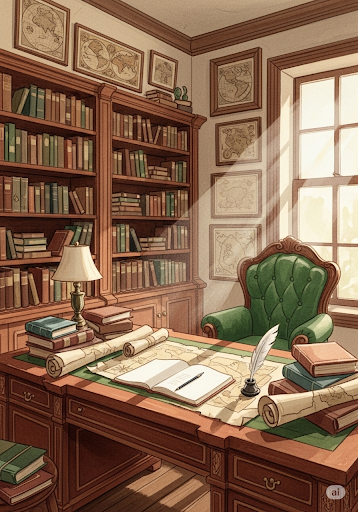
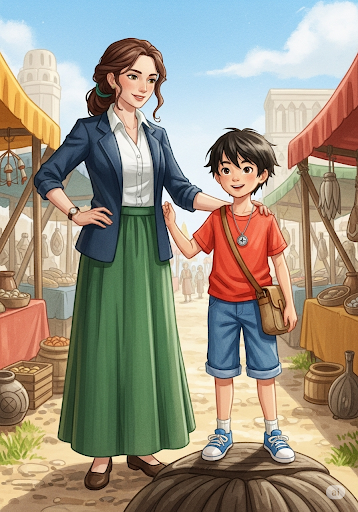
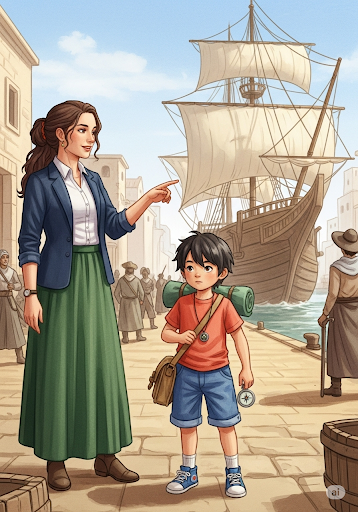
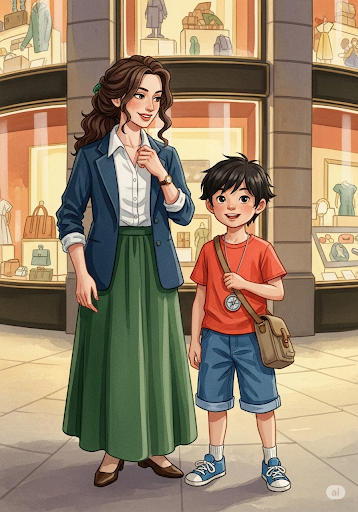
In a cozy study filled with maps and dusty books, lived Dr. Elara, a brilliant economic historian. Her young apprentice, Leo, loved to visit, always eager to learn about how people bought and sold things long, long ago.
1
One day, Dr. Elara pulled out a very special book, unlike any other. 'This, Leo,' she whispered, 'is the Time-Trade Atlas! It shows us how commerce evolved through the ages.'
2
With a shimmering glow, the atlas opened to a time long, long ago. 'Look, Leo!' Dr. Elara exclaimed. 'Before money, people traded. A farmer might swap his apples for a weaver's cloth! This is called bartering.'
3
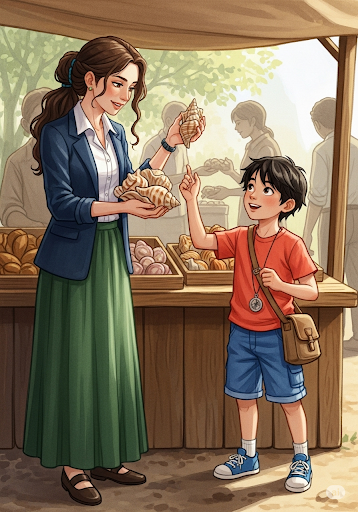
But bartering was tricky. What if the weaver didn't need apples? So, people found things everyone valued, like shiny shells or precious salt, to use as early forms of money.
4
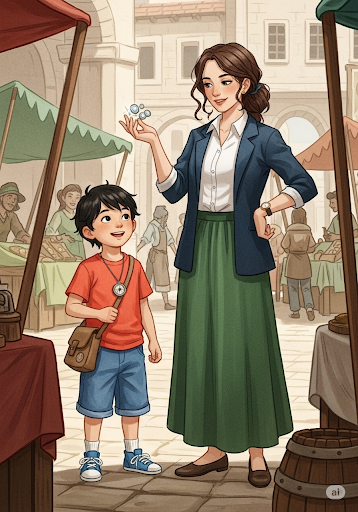
Soon, metal coins appeared! They were easier to carry and count. Markets grew, bustling with people buying and selling with their new coins.
5
As cities grew, so did trade! Brave merchants sailed across oceans and trekked vast lands, creating famous trade routes to bring exotic goods from far away.
6
Then came the Industrial Revolution! Factories hummed with machines, making goods faster and cheaper than ever before. This changed how people worked and what they could buy.
7
Soon, big shops and department stores filled cities. You could find everything under one roof, from clothes to toys, making shopping a grand adventure!
8
And finally, the internet! Now, with a click of a button, you can buy things from anywhere in the world, right from your home. Commerce had truly gone global!
9
Dr. Elara smiled. 'Economic history shows us how clever people have always been, finding new ways to trade and connect. And the story of commerce is still being written, every single day!'

 Share
Share