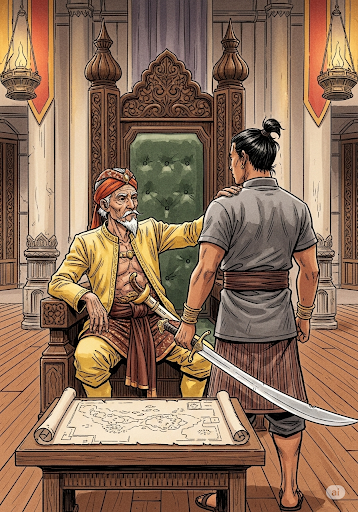
In the golden age of the Sultanate, the air was heavy with the scent of spices and the weight of legacy. Sultan Ahmad, a man whose wisdom was etched into the lines of his face like a map of his lands, sat upon his throne for the final time as a sole ruler. He looked upon his eldest son, Ibrahim, and declared a decree that would change the tides of history. To ensure the prosperity of the realm, he divided his kingdom into four great reaches, granting each son a piece of the earth to guard with his life.
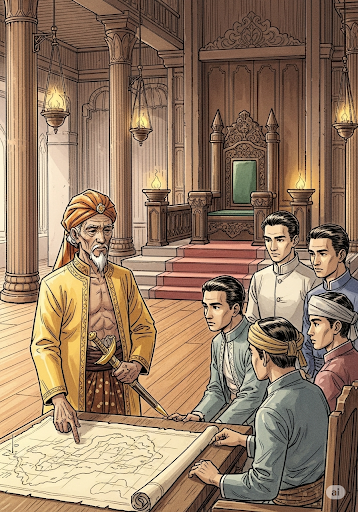
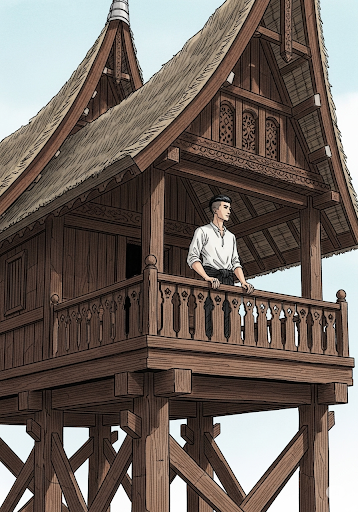
Each brother retreated to his new domain, building grand Rumoh Acèh stilt houses that rose like wooden giants from the earth. Meurah Pupôk took command of Banda Aceh, the heart of the trade winds. His home was a masterpiece of joinery, built without a single iron nail, held together by the strength of the timber and the spirit of the ancestors. From his high porch, he watched the horizon, unaware that the wind was beginning to carry the salt of foreign iron.
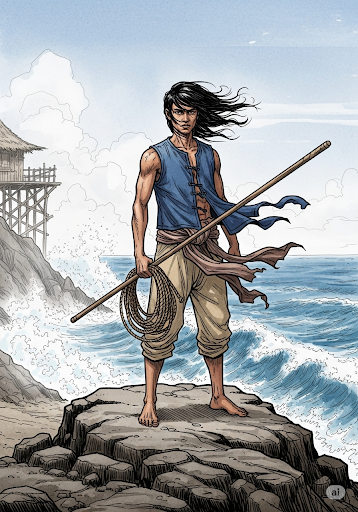
Far to the west, where the waves of the Indian Ocean battered the rugged coast, Hasyim looked over the island of Simeulue. His portion of the kingdom was one of salt and spray, a vital shield for the mainland. While his brothers managed the sprawling forests and bustling markets, Hasyim prepared his people for the isolation of the sea, teaching them that the strength of the kingdom lay not in its unity of land, but in the vigilance of its borders.
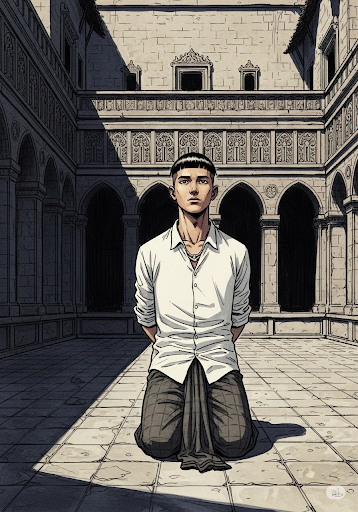
While war raged without, a deadlier poison spread within. Traitors, seeking favor with the invaders, whispered lies into the ears of the council. They accused Meurah Pupôk of the ultimate betrayal—adultery against the royal code. Without the protection of his brothers, the noble prince was led to the executioner’s block. He died not by a foreign bullet, but by the cold steel of his own people’s deception, a tragedy that bled the kingdom’s spirit dry.
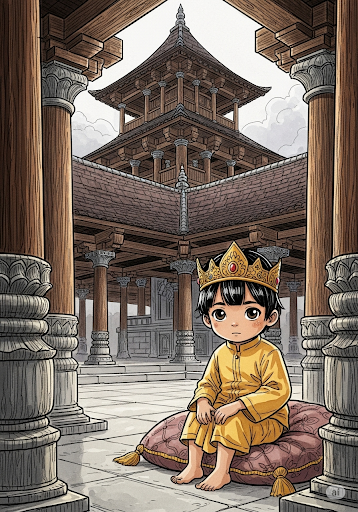
In the midst of the chaos, a flicker of hope appeared at Masjid Tuha Indrapuri. Tuanku Raja Ibrahim, a boy of only seven years, was lifted onto the throne. The crown was too heavy for his small head, and his feet did not touch the floor as he sat in the ancient mosque. The elders looked upon the child king, seeing the last ember of a dying fire. He was the sovereign of a land he had barely begun to walk, a king of ruins and prayers.
But shadows moved behind the throne. Daud Syah, the trusted Panglima Polem, looked upon the child king and the crumbling walls and saw a different future. He met in secret with the Dutch officers, the clink of gold coins echoing the betrayal in his heart. He promised to deliver the kingdom into their hands in exchange for a seat of power. The glory of Aceh was sold in a hushed room, traded for the hollow promises of men who viewed the land as a ledger.
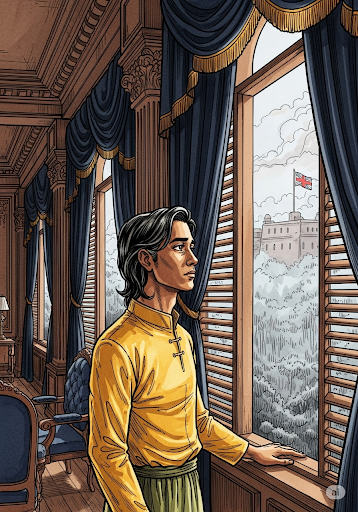
The Dutch rule began, a long winter that lasted forty-two years. The Rumoh Acèh began to weather and grey, and the child king, Tuanku Raja Ibrahim, grew up in a gilded cage. He watched from his window as the foreign flags rose over the mosques and the forests were carved into plantations. The sovereignty his father had divided so carefully was now gathered into a single, cold grip. The pride of the Acehnese was tested by decades of silence and the slow erasure of their ways.