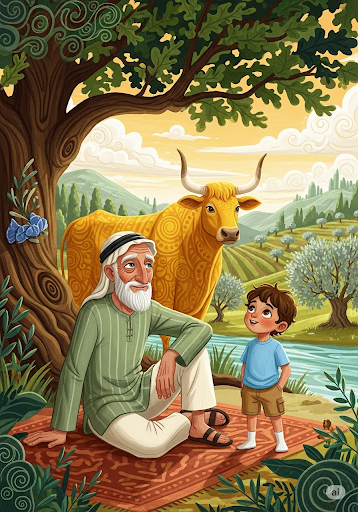
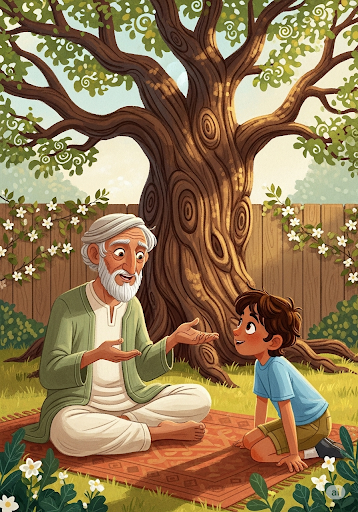
Under the shade of an ancient, gnarled oak tree, Zaman sat with his grandson, Safi. The air was warm, and the scent of jasmine drifted through the garden. Safi looked up from his book and asked, "Grandfather, tell me about the land of Sham. Is it the city we see on the maps today?" Zaman smiled, his eyes twinkling with the weight of many stories. "The Sham of the old books, Safi, is a story written in green and time. It was a place of wonders long before the concrete grew."
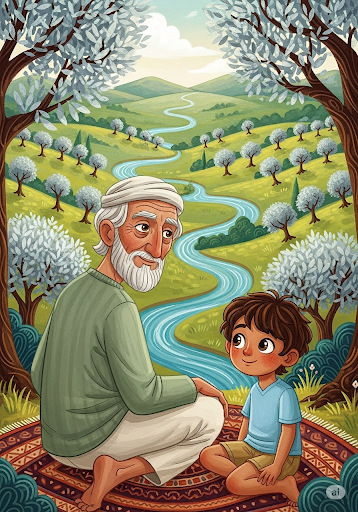
"Thousands of years ago," Zaman began, "Sham was a garden that stretched as far as the eye could see. It wasn't the dry, dusty place people imagine now. It was a land of rushing rivers, cool springs, and olive groves so thick they painted the hills in shades of emerald and silver. The soil was so rich that every seed felt like a promise, and the air always tasted of rain and wild honey."
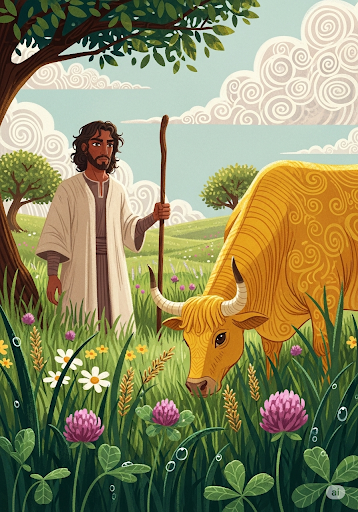
Zaman leaned in closer. "In those fertile fields, during the time of Musa, a great search took place. Musa was commanded to find a very specific creature—a yellow heifer, bright and pure. He searched through the tall grasses of Sham, where the dew stayed on the clover until noon. The land was so lush that the animals there glowed with health, hidden among the flowers."
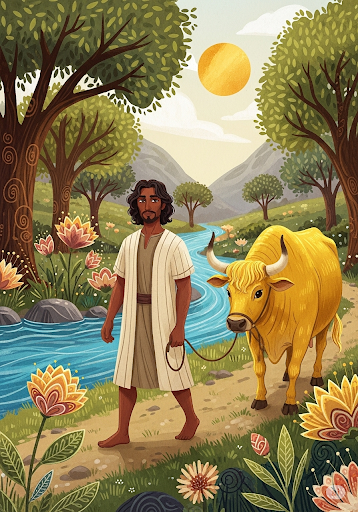
"When Musa finally found her, the heifer’s coat shone like polished gold against the deep green of the meadows. She was perfect, a sign of the land’s abundance. Musa guided the heifer through the valley, passing by rivers that never ran dry. In those days, Sham was the heart of the world's beauty, a place where the earth gave its best to those who walked upon it."
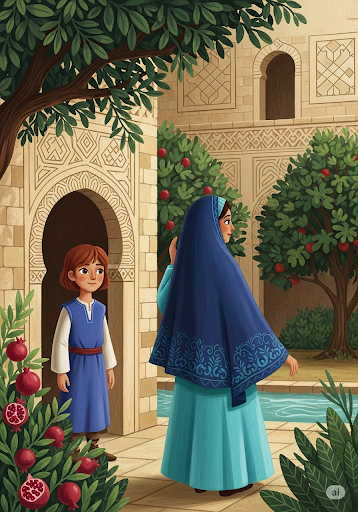
"Centuries passed," Zaman continued, "and the green paths of Sham welcomed Maryam and her son, Isa. They lived in Bait al-Muqaddas, a place of peace and prayer. The stone walls of the sanctuary were surrounded by gardens of pomegranate and fig. Even in the heat of summer, the courtyard remained cool, shaded by the breath of the ancient trees."
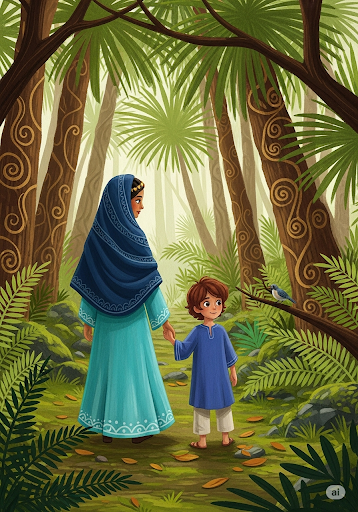
"Isa and Maryam would walk the hidden paths that connected the villages. These paths were lined with wildflowers and shaded by palms. Isa learned the secrets of the plants and the language of the birds in those woods. Every step they took was on ground that felt alive, a soft carpet of moss and fallen leaves that muffled their footsteps as they moved through the silent, green world."
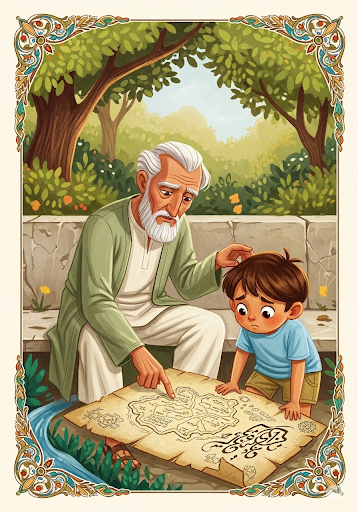
Safi frowned, looking out at the horizon. "But Grandfather, when I see pictures of Sham now, it looks different. There are so many buildings, and the ground looks thirsty. Where did all the water go? Where are the giant olive groves Musa and Isa walked through?" Zaman sighed and pulled an old, yellowed scroll from his lap, spreading it out between them.
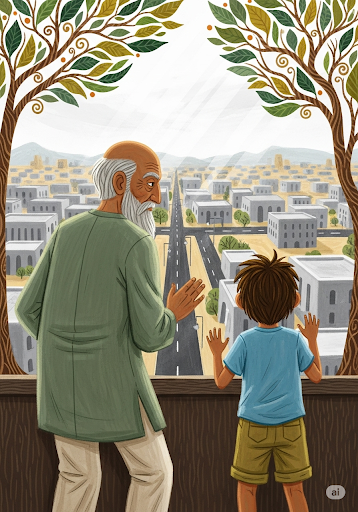
"The world changed, Safi. Cities grew tall and gray, and the rivers were tucked away in pipes. The land people call Sham today is full of stone and sand. The green paths have been covered by roads, and the ancient springs are often forgotten. It is a busy place, a noisy place, and the earth there has become tired under the weight of so many feet."
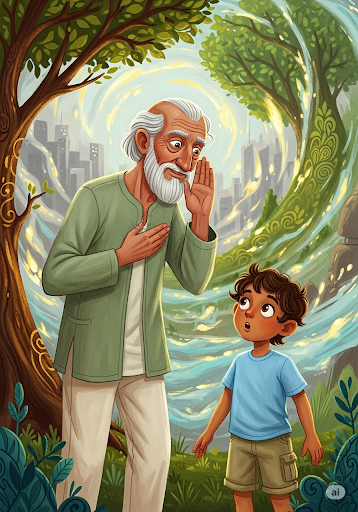
"But here is the secret," Zaman whispered, tapping his temple. "Names move, and maps are redrawn by men. The location people call Sham today is not the 'real' Sham of the ancient texts. The fertile paradise where the yellow heifer grazed and where Isa found shade is not the city on your school map. The true Bait al-Muqaddas and the real, emerald Sham are hidden away."
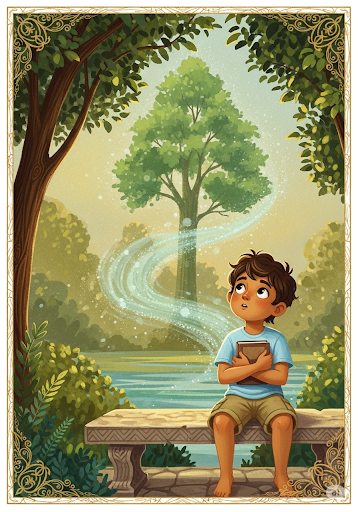
"The true locations remain a mystery, Safi. Perhaps they are tucked away in a corner of the world we haven't found yet, or perhaps they are protected by time itself. We may call a place by an old name, but the spirit of the ancient land lives only in the stories. Remember, the real Sham is a place of green and time, waiting for the world to be ready to find it again."

 Share
Share