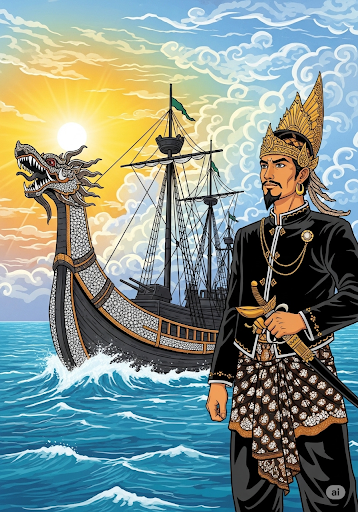
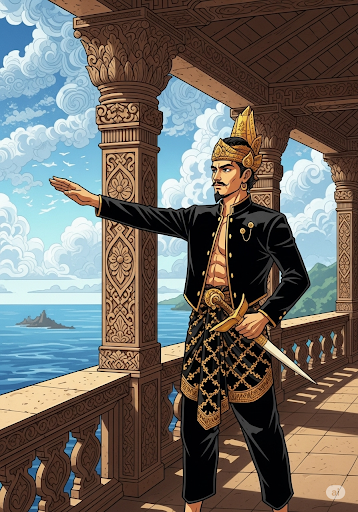
In the golden 17th century, under the humid, sapphire skies of Aceh Darussalam, Sultan Iskandar Muda stood upon his palace balcony. He looked toward the horizon where foreign ships threatened the spice routes and the freedom of his people. "Our seas are our soul," he proclaimed to the wind. "We shall build a fleet so vast it will eclipse the sun, for our honor must never be shackled!"
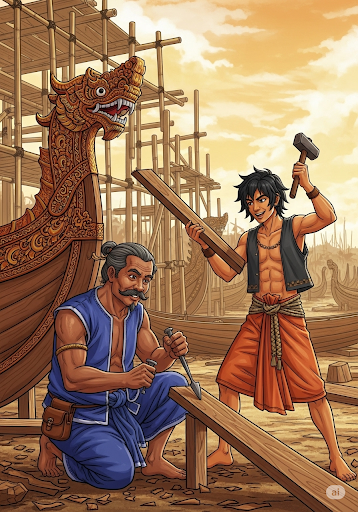
The Sultan's word was like fire spreading through the land. Nine hundred and fifty master carpenters, including the skilled Bakti and his friend Teguh, gathered their adzes and saws. For seventeen months, the air was filled with the scent of cedar and the rhythmic melody of hammers. From the shipyards of the Krueng Aceh, a thousand warships began to take shape, their hulls strong and their masts reaching for the clouds.
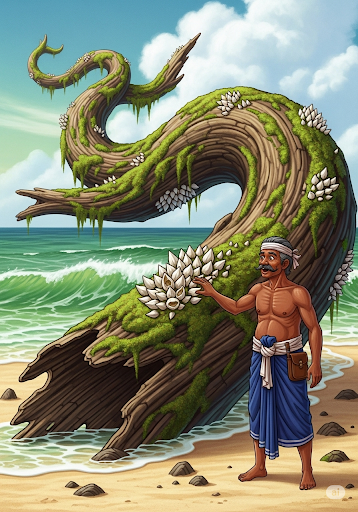
One morning, after a fierce storm, a strange gift arrived from the kingdom of Johor. A massive log, seventy-eight meters long, drifted onto the shore. It was encrusted with ancient oyster shells and barnacles, its wood twisting and turning like a sleeping dragon. Bakti and the other workers whispered in awe, for no forest they knew grew trees this magnificent or mysterious.
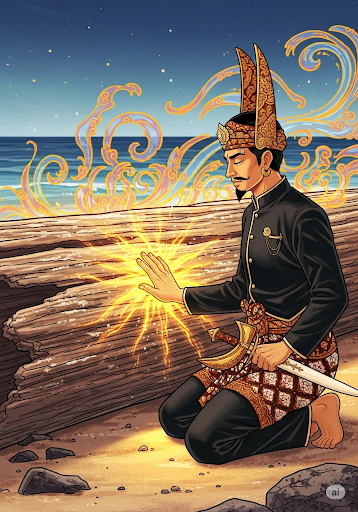
Sultan Iskandar Muda walked down to the shore to see the giant wood. As he laid his hand upon its rough, salt-stained bark, a low vibration hummed beneath his palm. The wood whispered a secret only the Sultan could hear—it was originally sent to bring ruin to Aceh, but seeing the Sultan's noble heart, it now chose to serve him. "Transform me," the spirit of the wood pleaded, "and I shall carry your people to glory."
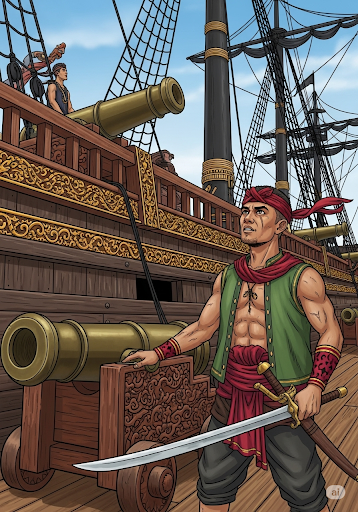
In just twenty days, the giant wood was reborn through the Sultan's vision. It became the backbone of the Cakra Donya, a warship so massive it looked like a floating fortress. Admiral Malem Dagang, the Sultan’s most trusted commander, watched as the final cannons were mounted. It was more than just a ship; it was a legend made of timber and iron, ready to haunt the dreams of any invader.
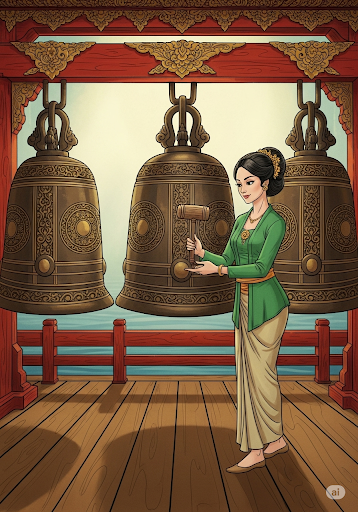
To guide the soul of the great ship, three sacred bells were forged: Akidatoi Umu, Tulak Mara, and Kasira Khairan. Putroe Kamaliah, the Sultan’s wise Queen, came to the docks to bless them. She knew that the bells’ chimes would calm the storms and strike fear into the hearts of the wicked. Their ringing was the heartbeat of Aceh, echoing the strength and faith of the people.
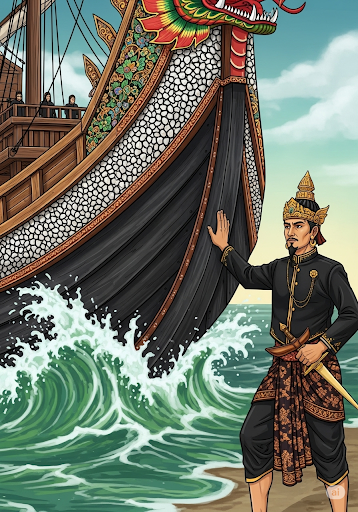
When the day of the launch arrived, the Cakra Donya would not budge. Hundreds of men pulled on heavy ropes, but the ship stayed anchored to the land as if it were part of the earth itself. The Sultan stepped forward, offering a quiet prayer. He stroked the side of the hull with a father's touch, and with a thunderous boom that shook the very clouds, the giant ship slid effortlessly into the emerald waves.
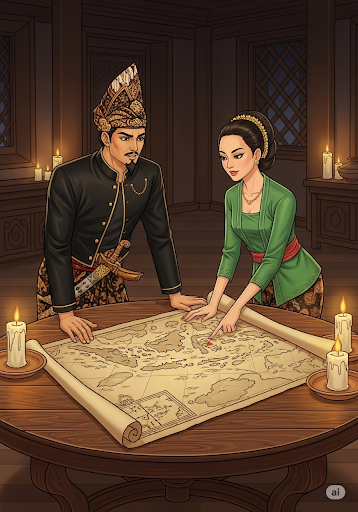
With the fleet ready, a grand meeting was held to plan the defense of the seas. Putroe Kamaliah spread a hand-drawn map of the Malacca Strait across the table. She spoke of the treacherous currents and the hidden sandbars of the Sea of Banang. "The invaders rely on their heavy cannons," she advised the Sultan, "but we shall use the breath of the sea and the speed of our Cakra Donya to outmaneuver them."
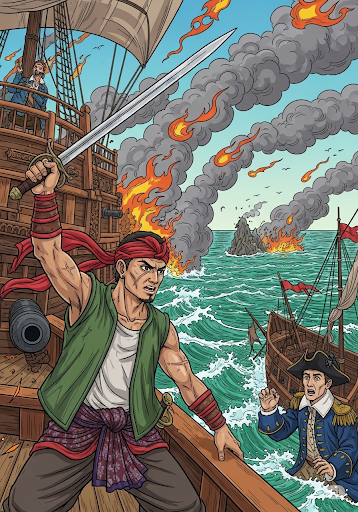
The seas turned to fire as the fleets finally clashed. Admiral Malem Dagang steered the Cakra Donya through the thick smoke of a hundred cannons. The giant ship crashed through the enemy lines like a leviathan of old. The Portuguese captain watched in terror from his own deck as the "World Terror" bore down on him, its dragon-prow roaring through the waves.
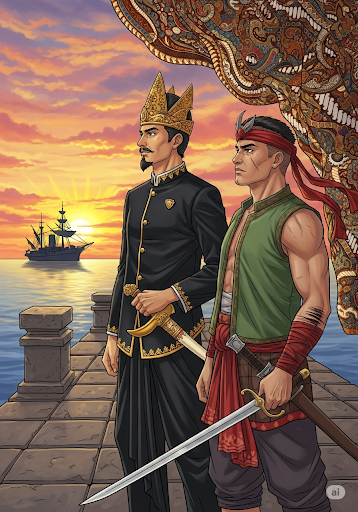
Victory was absolute, and the Cakra Donya returned home a hero. The Europeans began to speak in hushed, fearful tones of the Espanto Del Mundo—the Terror of the World. Today, the legend of Sultan Iskandar Muda and his Admiral lives on. It serves as a reminder that with wisdom and courage, a people can build a legacy that never sinks beneath the waves of time.

 Share
Share